MRI
Precision Imaging Without Radiation
Magnetic resonance imaging (MRI) is a safe, non-invasive scan that uses powerful magnets and radio waves to create highly detailed images of your body’s internal structures. Unlike X-rays or CT scans, MRI does not use radiation and is especially useful for diagnosing a wide range of conditions, including cancer, back pain, stroke, bone and joint disorders. It can also scan soft tissues and organs that are less visible through other imaging techniques. Our goal is to deliver exceptional imagining results with MRI in a calm and comfortable environment.
What Can Magnetic Resonance Imaging Be Used For?
MRI can be used throughout the body, and it produces extremely detailed images. It offers precise images of joints and soft tissues, including the knees, shoulders, ankles, wrists and more and is effective at identifying injuries to tendons, ligaments and cartilage. Magnetic resonance imaging can also diagnose spinal problems.

Heart & Vascular Imaging
In addition to musculoskeletal conditions, MRI can evaluate the heart and its structures, the aorta and blood vessels, all without the use of radiation. These images of the heart can help:
Organ Imaging
MCR uses MRI to scan and produce high-quality images of the soft tissues of the body, such as organs, including the following chest and abdomen organs:
Cancer Screenings
The MCR team also uses MRI to help detect, diagnose and guide treatment for cancers. For example, breast cancer screenings especially are a great alternative to traditional mammograms, especially for high-risk patients who may need to and may want to avoid the low radiation exposure associated with other imaging modalities.
Preparing For Your MRI
We will help you feel as prepared and comfortable as possible ahead of your imaging procedure. Before your scan, you’ll need to remove anything containing metal, jewelry, dentures and hair accessories such as wigs. Let our technologist know if you have:
What To Expect
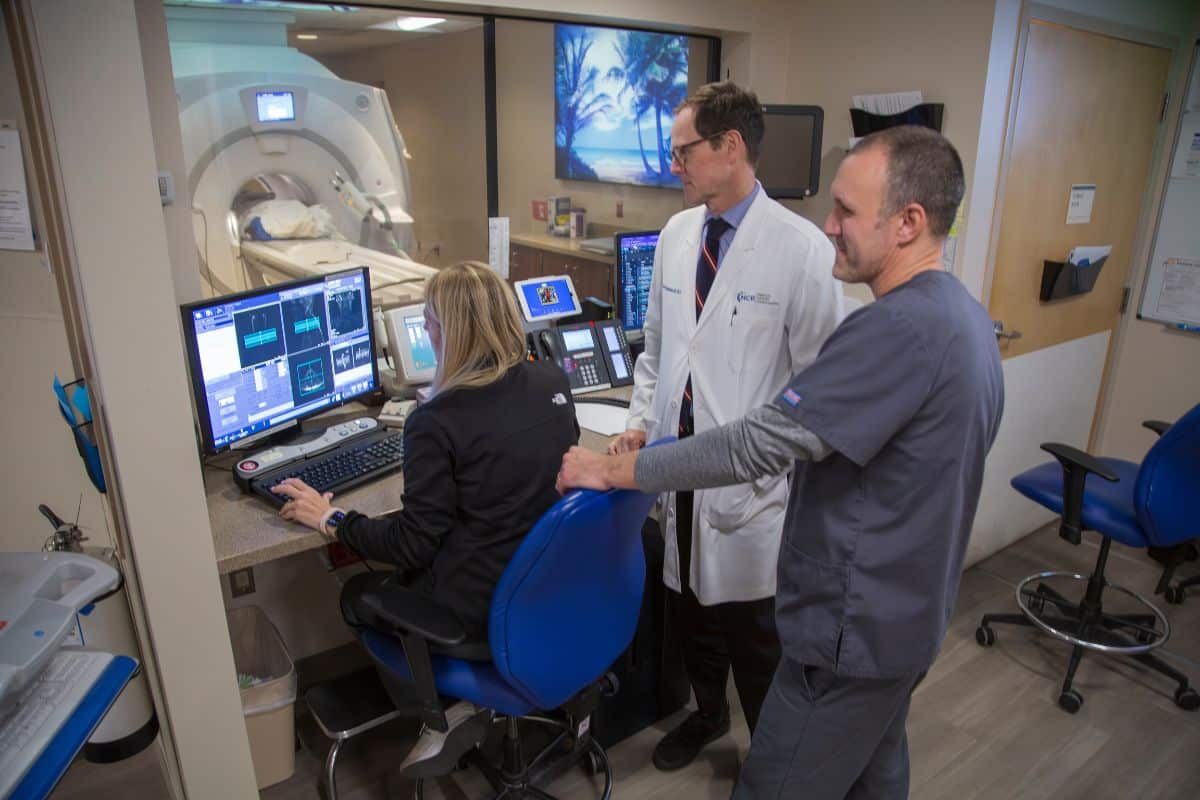
These exams usually take 15 to 45 minutes, depending on the area being scanned. More detailed studies may take longer. The technologist or our radiologist will help you lie comfortably on a sliding table that moves into the MRI machine before leaving the room. However, we will still be able to see you and talk to you through the intercom. If you need to, you may be able to bring a family or friend to keep you company during your scan.
In some cases, you will need to take a contrast material, or dye, ahead of your scan, which will help our team be able to see the imaging more clearly. Our team may administer this via IV, either in your arm or hand.
Is MRI Painful?
The scan does not hurt, but it can be fairly loud. For your comfort, we provide headphones or earplugs. During the scan, you will hear tapping or thumping noises and you may feel a slight warming sensation in the area as it is scanned. This is completely normal. If we use contrast, you may also feel a cool or mild sensation at the injection site.
Our Locations