Prostate Artery Embolization (PAE)
Minimally Invasive Benign Prostatic Hyperplasia Treatment
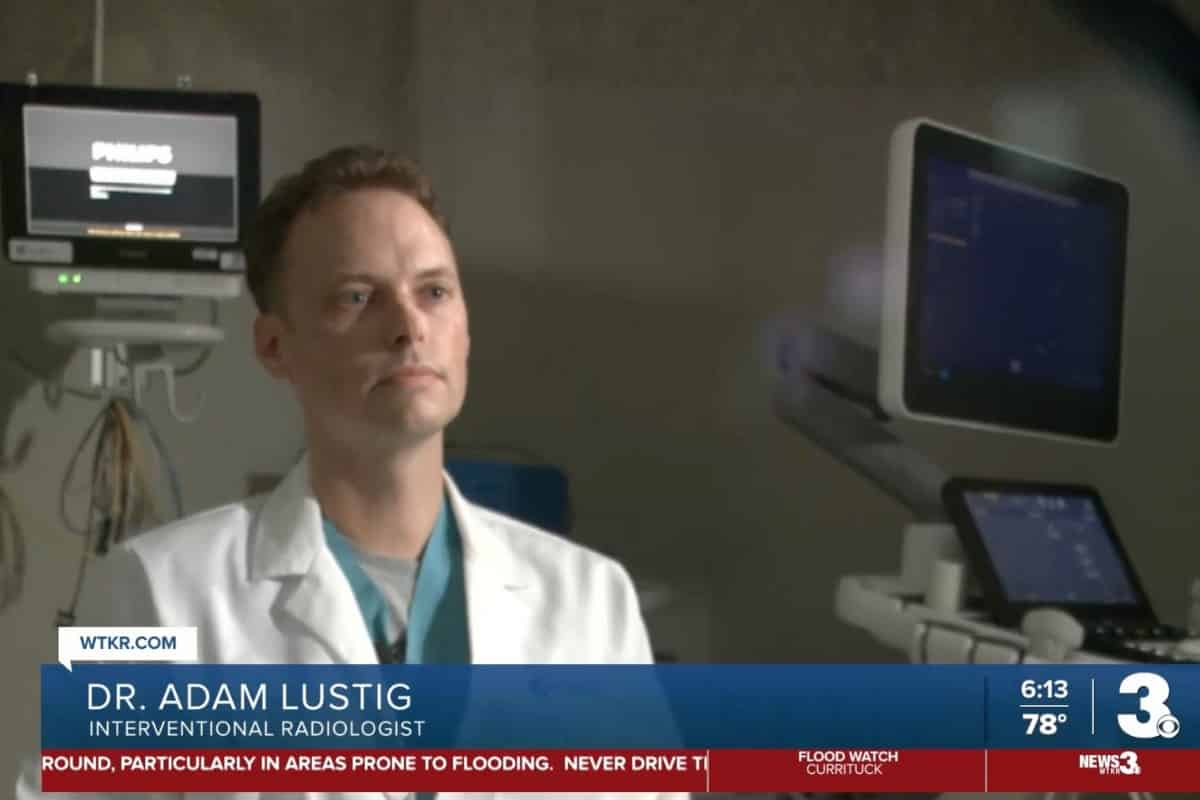
MCR’s PAE Center is one of the leading ones in the U.S. Our physicians who perform the Prostate Artery Embolization (PAE) procedure are dual-board certified in interventional radiology and diagnostic radiology. They are the only physicians in the Tidewater area who perform PAE, and they received specialized training during their fellowships.
What Is Benign Prostatic Hyperplasia (BPH)?
According to the NIH, Benign Prostatic Hyperplasia (BPH) is one of the most common health conditions of aging men worldwide, accounting for up to 4.5 million office visits annually. At age 70, 40% of men are symptomatic and by age 75, 50% are symptomatic.
What Are The Symptoms Of BPH?
Urinary symptoms of Benign Prostatic Hyperplasia include:
What Is Prostate Artery Embolization (PAE)?
Prostate Artery Embolization (PAE) is a treatment for BPH. PAE is a minimally invasive, outpatient procedure performed through a quarter inch incision in the right groin or left wrist, enabling you to return to your normal activities quickly without any risk of urinary incontinence or sexual dysfunction.
To test the severity of your symptoms, take this International Prostate Symptom Score (IPSS) survey. Bring it with you to your appointment with MCR to discuss your individualized treatment plan.
What Causes Symptoms?
Symptoms result from an increase in size of the prostate gland, specifically the transitional zone of the gland which surrounds the urethra or urine channel. As this multifactorial process continues in aging men, the prostatic urethra/urine channel becomes more and more narrow, eventually resulting in urinary retention, an inability to urinate, in some men.

Why Does Prostate Artery Embolization (PAE) Work?
The goal of the Prostate Artery Embolization (PAE) procedure is to decrease the blood flow to the prostate gland, thus depriving the cells of the nutrients which they need to survive. This results in cell death and an overall reduction in prostate gland size, increasing the caliber of the urine channel and alleviating BPH symptoms.
Benefits Of PAE
A multitude of medical and surgical therapies are available for the treatment of BPH, but may have undesirable side effects and complications, including retrograde ejaculation and urinary incontinence, neither of which are reported with PAE.
How Is The Prostate Artery Embolization (PAE) Procedure Performed?
Upon arrival in the Interventional Radiology Clinic, an IV is started and pre-procedural antibiotics are administered to prevent infection, as well as a one-time dose of IV steroids to help decrease the inflammatory response to the embolization procedure. Our physician uses conscious sedation, or twilight sleep, which is administered by the physician, and our highly trained nursing personnel continuously monitor the patient’s vital signs.
Our radiologists typically do not place a Foley catheter. However, some patients may already have a catheter in the bladder if they are dependent on one. The Prostate Artery Embolization (PAE) procedure is performed through a small, quarter inch incision in the right groin or the left wrist enabling access to the arterial system.
Our physician uses specially designed wires and catheters to gain access into the left and then right prostatic arteries. The X-ray, or fluoroscopy, machine is used to create a specialized 3D reconstruction of the X-ray data in the form of a cone beam CT scan to ensure access into the prostatic arteries.
Small particles called microspheres, which are less than 1 millimeter in size, are delivered into the prostatic arteries, thus blocking the flow of blood into the prostate gland. Without sufficient blood supply, the cells within the prostate gland will begin to die and the gland will decrease in size over time.
Post-Procedure Care
Patients remain in the Interventional Radiology recovery area for approximately 3 hours post-procedure and are then discharged home. Our team routinely prescribes a course of oral antibiotics, a short steroid taper and a high dose of NSAIDs for the next seven days to prevent infection and decrease the inflammation within the prostate gland.
In the first 3-5 days following the procedure, increased urinary frequency (up to several times per hour), bladder spasms and pelvic discomfort are common. Additional medications to decrease these symptoms may be prescribed at the discretion of your physician.
Prostate Artery Embolization (PAE) Outcomes
Approximately 4-6 weeks after the procedure, the prostate gland will begin to decrease in size. At this point, patients with indwelling catheters prior to the procedure may begin voiding trials.
We routinely see patients in follow-up at 3 months post-procedure for a simple ultrasound for the purpose of prostate gland measurement. At 6 months post-procedure, your radiologist will order an imaging study such as a CT scan or a prostate MRI.
Success is mainly measured clinically with improved IPSS (AUA) scores but can also result in significantly increased urinary flow rates, improved bladder emptying and decreased prostate volume. According to the NIH, an approximately 15-30% reduction in prostate gland size can occur by three months after the procedure, and up to 50% at 12 months.
Clinical Outcomes Of PAE
Peer-reviewed literature reports a clinical success rate of 88% for Prostate Artery Embolization (PAE), with repeat intervention rates at 1 year equivalent to those in patients having undergone transurethral vaporization, laser resection or thermal ablation.
A randomized clinical trial including 114 patients documents equivalent symptom improvement at 6 months post procedure in patients who underwent TURP (transurethral resection of the prostate) and PAE, with equivalence remaining out to 12 and 24 months post-procedure. PAE patients did not report erectile dysfunction and incontinence.

Contact Us
To learn more about Prostate Artery Embolization (PAE) at MCR’s Interventional Radiology Clinic, contact us at (757) 388-3401 or request an appointment. For the convenience of our patients and for the Tidewater community, our interventional radiology clinic is located within Norfolk General Hospital.
5-Star Prostate Artery Embolization Reviews
request a Prostate Artery Embolization appointment
Clarity in Every Image, Care in Every Diagnosis
Our Locations